
The bag-fee trap: why the cheapest ticket is often not the cheapest
Published November 13, 2026 · Filed under Fare tips
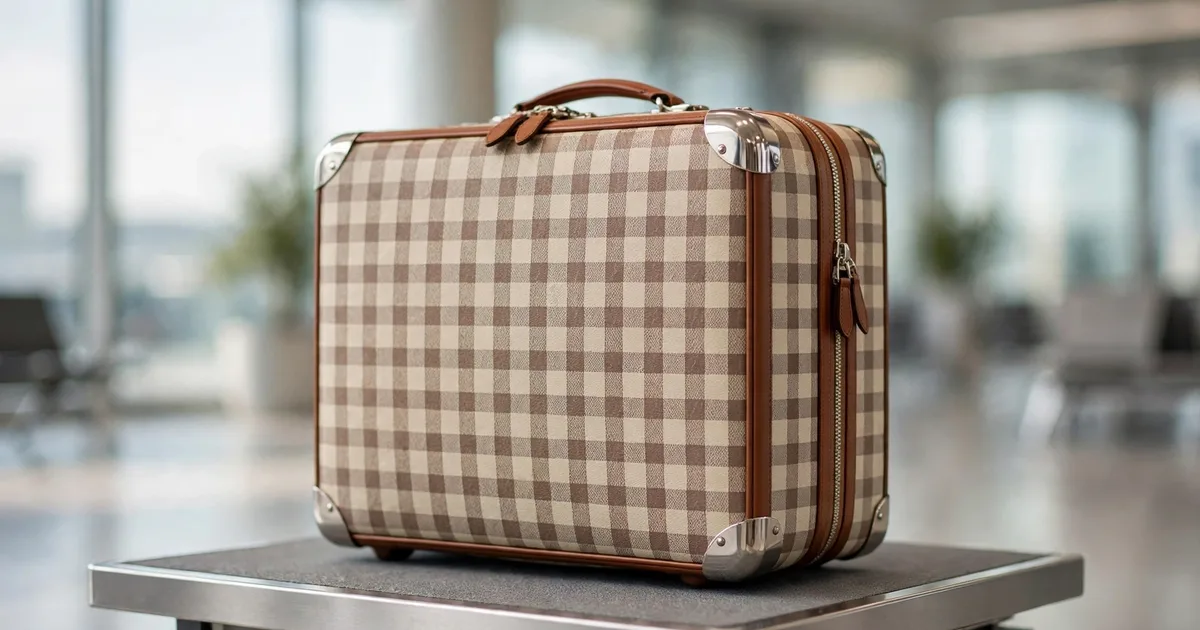
The cheapest ticket on the screen is often not the cheapest flight. The difference is hiding in the baggage step — usually two clicks after the price that made you stop scrolling.
How the trap works
Airlines compete on the headline fare: the number comparison sites sort by, and the number in big type. Checked baggage is priced later, by fare class and by seller — and the gap between options is enormous. On fares we tracked in November 2026, one checked bag added anywhere from $55 to $543 to the ticket. The "expensive" airline with the bag included can land cheaper than the "cheap" one without it — and on some fares, the bag costs more than the seat.
Three real fares, with the dates on them
Vancouver (YVR) to Toronto (YYZ), seen November 10, 2026, for December 3–10 travel: headline fare $193 — the cheapest on the board. Checked bag: +$155. True total: $348. Our fair price for the route: $220; buy-or-wait score 5.5 / 10. The $193 was real. It just was not the price of the trip.
The same route, a different week: headline $205, bag +$189, true total $394 — against a fair price of $230. The headline moved $12 between the two checks; the bag moved $34. The volatile part of a cheap fare is rarely the fare.
Calgary (YYC) to New York, seen November 12, 2026: headline fare $361, checked bag +$304, true total $665 — and even so, a strong fare for that route (score 8.0 / 10, fair price $425). The bag fee does not make a fare bad. It makes the headline meaningless until it is added.
Anatomy of a bag fee
A bag fee is not one price; it is three decisions stacked. Fare class: the cheapest classes include the least — Air Canada's Economy Basic has included only a personal item since January 2025, so its "bag fee" is really the price of having luggage at all; Flex includes the first checked bag free. Direction: fees are charged per direction, so every number you see doubles on a round trip. Seller: buy the same bag through a third-party checkout and the price is whatever that seller sets — on Calgary→New York we measured marketplace add-ons from $239 to $543 for a bag the airline itself prices at $45 plus tax per direction. Our full breakdown of the airline's own table is in the Air Canada baggage guide.
The honest ways around the fee
Do the fare-class math. A class that includes the bag wins whenever its premium is smaller than the bag round trip — on Air Canada, roughly $90 for one checked bag. Travel at personal-item size when the trip allows it: 33 × 43 × 16 cm is a small backpack; for a two-day trip it is a legitimate strategy, not a stunt. Buy the bag from the airline when a third party's add-on exceeds the published rate. Share one checked bag between two travellers on the same booking where the fare rules allow it — two personal items plus one shared suitcase beats two suitcases on most short trips. What does not work: hoping the fee disappears at the airport. It is at its most expensive there, and overweight charges stack on top.
The rule
Never compare headline fares. Compare true totals: fare + the bags you will actually check. That is the only number that leaves your account.
It is also the number FareLovers shows you. Every fare on this site carries its true total and a buy-or-wait score from 0 to 10, measured against what the route usually costs — so the trap is visible before it springs, not after. And if a fare's score says wait, a free price alert will watch it and email you at your target price.
Before you book, three checks
1. Add your real bags — both directions — before comparing anything.
2. Read the true total, not the headline.
3. Check the score: a low score on a "cheap" fare is the trap, labelled.
The fee, compared across everything we measured
| Where the bag was priced | Example (seen Nov 2026) | One checked bag |
|---|---|---|
| Airline's own rate (Air Canada, per direction) | Canada/U.S. economy, Basic or Standard | $45 + tax |
| Marketplace add-on, kind end | WestJet nonstop, Calgary→Cancun, Jan 2027 | +$55 |
| Marketplace add-on, middle | Flair-era fare, Vancouver→Toronto | +$155 to +$189 |
| Marketplace add-on, steep | Air Canada nonstop, Calgary→New York | +$239 to +$304 |
| Marketplace add-on, extreme | Connecting fares, Calgary→New York | +$462 to +$543 |
One product — a 23 kg suitcase in the hold — priced across a twelve-to-one range depending on whose checkout sells it to you. Nothing about the bag changes. This spread is why "check the bag price" is useless advice unless it says where: the same traveller, on the same day, can pay $45 or $543 for the identical suitcase, and both prices are "the bag fee" in somebody's interface.
It is also why the trap survives every awareness campaign. Travellers learn to glance at the baggage line, see a number, and move on — but the number's meaning depends on the seller and the fare class behind it. The only defence that scales is the one built into every FareLovers result: the true total is computed for you, from the fare's own construction, before ranking. A ranking you can trust has to do this arithmetic itself, because no human scanning forty fares will do it forty times.
A five-minute routine that disarms it
Decide your bags before you search. Not "probably one checked bag" — the actual count, both directions. A search run with the wrong bag assumption produces a ranking that is wrong in a way no later step fully repairs.
Search once with bags included, and read only true totals. If a results page cannot show the bag price, build it from the airline's own table — for Air Canada that is $45 plus tax per direction on most economy fares — and pencil it onto every headline before comparing.
Re-rank by true total and note the winner's name. It will differ from the headline winner more often than it matches. That difference, on your route, is the exact size of the trap.
Check the winner's score. A true total can be the best available and still be a bad fare for the route — the score carries the route's history, which a single search cannot. Best-available and good-value are different judgements; you want both.
If the score says wait, set the alert at the true total you would accept. Alerts watch the number that matters, so the email that arrives is a decision, not another research project. Five minutes, once — against a fee structure designed to be priced by nobody.
The trap in one sentence
The headline fare is priced to win your click; the bag is priced after it has. Everything in this guide — the $348 hiding inside a $193 ticket, the $543 bag riding a $318 fare, the twelve-to-one spread on the same suitcase — is that one sentence, measured. Compare true totals, buy the bag where it is cheapest, and let the score tell you whether today's best total is actually a good one. Do those three things and the trap has nothing left to catch.
Questions travellers ask
Why is the bag fee sometimes higher than the flight?
Because the two prices are set by different logic. The fare is a forecast fighting for your click; the bag fee is set by fare-class rules or by the seller's own add-on pricing, and on discount fares it can exceed the ticket — we measured a $543 add-on on a $318 fare.
Is it cheaper to buy the bag from the airline or at booking?
Usually the airline's published rate is the floor: Air Canada's first checked bag is $45 plus tax per direction on most economy fares. Third-party add-ons in booking flows vary widely — we measured $55 to $543 on real fares — so compare before you accept the first offer.
Can I avoid bag fees by travelling with a personal item only?
Yes, if your trip genuinely fits: on Air Canada Economy Basic the personal item is at most 33 × 43 × 16 cm. That is a small backpack, packed with discipline — fine for two days, heroic for a week.
Do bag fees get charged once per trip?
No — per direction, on each flight's fare rules. Budget double for a round trip.
Does a higher fare class ever beat a cheap fare plus bags?
Regularly. Air Canada Flex includes the first checked bag; whenever Flex costs less than about $90 more than Standard on a round trip, Flex is the cheaper true total.
Sources
Fares: FareLovers live results, Vancouver→Toronto and Calgary→New York, seen November 10–13, 2026. Bag-fee reference: Air Canada, Checked Baggage and Baggage Fee Changes pages, aircanada.com, retrieved November 13, 2026.
See also: When do flight prices drop? — how the score behind these judgements works.